By: Sarah Elson
Published On: 2/20/2026
IN PERFECT HARMONY:
What Are Somatic Workouts & Should You Try Them?
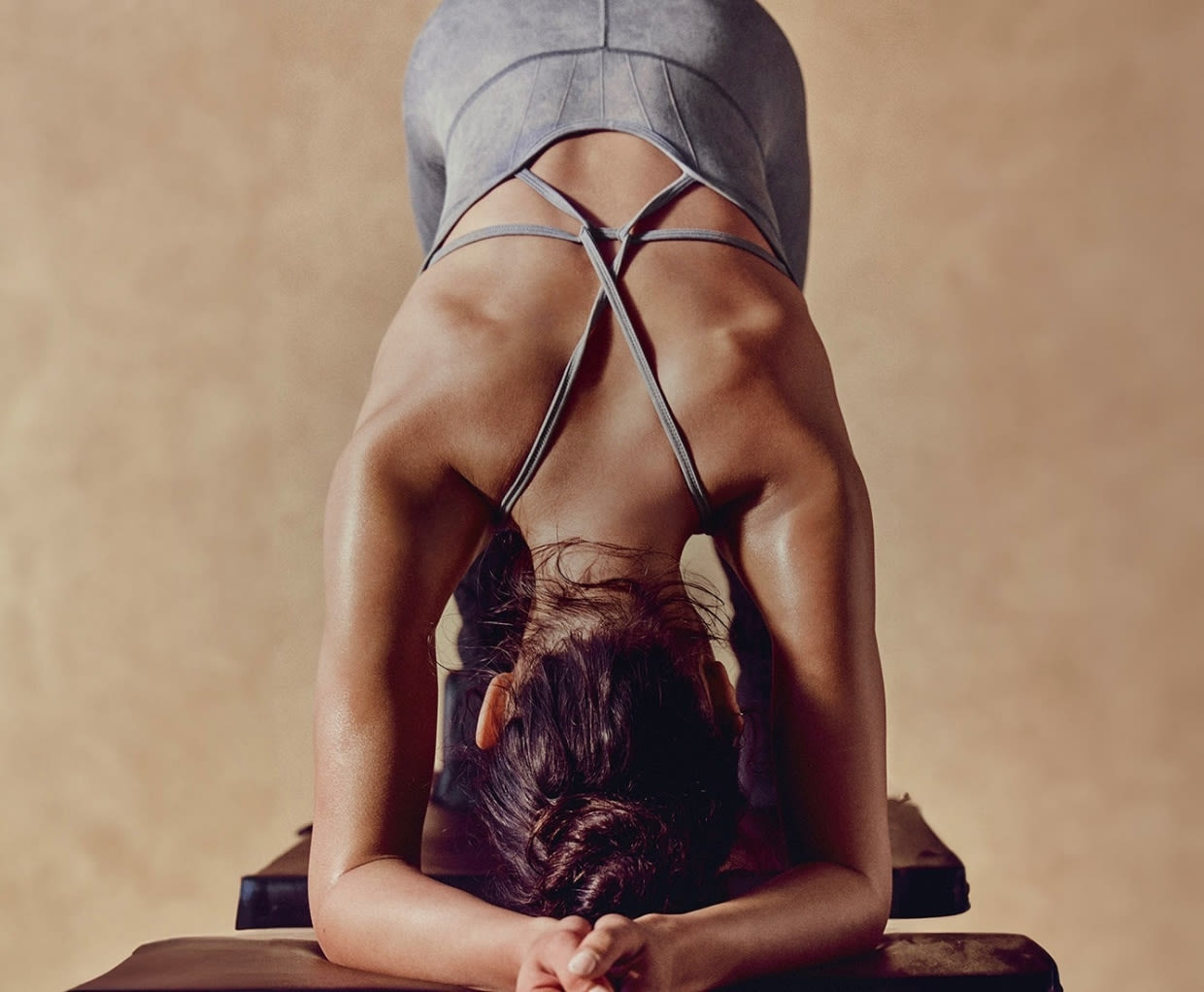
January isn’t the only time to adopt healthy habits.
Taking care of yourself is a year-round responsibility, so let's be kind to ourselves by concentrating on the mind-body connection. Enter: Somatic Workouts, a more holistic approach to our well-being and a great way to stay active while also prioritizing your own mental health.
What Are Somatic Workouts?
The term "somatics" was coined in 1976 by professor and theorist Thomas Hanna. The therapeutic application of somatic practices focuses on developing interoception, an awareness of internal body sensations such as breathing, tension, and pain, and connecting that perception to your body through intentional, conscious movement. If you're an avid exercise lover, you've probably heard the phrase "listen to your body." This practice takes that term and runs with it.
“It is a presence. It's a mind-body connection, awareness, and attunement. You know, somatic essentially means a…living, moving body,” said Rachel Rubin, a somatic therapist.
It’s easy to apply somatic practices to your everyday life or your workout routines. Any exercise or movement can be considered somatic; it’s all about how you implement the internal connection to your external world. For those who need a little more guidance on how to apply this practice, here are a number of exercises that you can implement.
“It is a presence. It's a mind-body connection, awareness, and attunement. You know, somatic essentially means a…living, moving body,” said Rachel Rubin, a somatic therapist.
It’s easy to apply somatic practices to your everyday life or your workout routines. Any exercise or movement can be considered somatic; it’s all about how you implement the internal connection to your external world. For those who need a little more guidance on how to apply this practice, here are a number of exercises that you can implement.
5 Somatic Exercises to Improve the Mind-Body Connection
Yoga
While anyone can incorporate somatic practices into their chosen workout routine, yoga is the most popular form of somatic exercise because it already blends traditional movement with mindful activity, fostering internal connection. Rather than focusing on how a pose looks, the somatic practice explores how it feels.
“It's being connected in your body…while you're moving, not just going through the motions,” said Rubin.
According to Rubin, gentle yoga that uses somatic exercises and movement is more meditative. After being inundated with trends or exercise fads focused on more stimulating workouts, it’s important to apply more restorative practices.
“Its [yoga] essence is about connecting with breath, presence, and flow, and these elements are all supportive of well-being,” said Rubin.
The slow movements of yoga help emphasize inner awareness and encourage intuitive movement. The next time you're in the studio, take a moment to connect with your body, whether by slowing down your usual yoga routine or by creating your own intentional movements.
“It's being connected in your body…while you're moving, not just going through the motions,” said Rubin.
According to Rubin, gentle yoga that uses somatic exercises and movement is more meditative. After being inundated with trends or exercise fads focused on more stimulating workouts, it’s important to apply more restorative practices.
“Its [yoga] essence is about connecting with breath, presence, and flow, and these elements are all supportive of well-being,” said Rubin.
The slow movements of yoga help emphasize inner awareness and encourage intuitive movement. The next time you're in the studio, take a moment to connect with your body, whether by slowing down your usual yoga routine or by creating your own intentional movements.
Dance
Most people might be hesitant to try this form of somatic exercise. However, don’t be discouraged; the practice primarily focuses on connecting activity to emotional release, without prioritizing choreography or how well you can dance.
“Free form dance, where you would just be doing it in your house, putting on your favorite song, or putting on a song that makes you want to…move in a certain way–that's really good for you,” said Rubin.
Dance is the most expressive form of somatic movement, allowing you to be in tune with your inner self by engaging with emotional and cognitive processes through activity. When you’re dancing, try moving your body based on how it feels in the moment, whether that’s taking a second to act a little silly or to express your emotions without needing to put it into words.
“Free form dance, where you would just be doing it in your house, putting on your favorite song, or putting on a song that makes you want to…move in a certain way–that's really good for you,” said Rubin.
Dance is the most expressive form of somatic movement, allowing you to be in tune with your inner self by engaging with emotional and cognitive processes through activity. When you’re dancing, try moving your body based on how it feels in the moment, whether that’s taking a second to act a little silly or to express your emotions without needing to put it into words.
Walking
Walking is an excellent way to incorporate exercise into your busy life; it is affordable, sustainable, and accessible. Somatic walking offers the same benefits as regular walking, plus additional advantages. The rhythmic movement of walking encourages internal and external awareness.
While you're walking, try focusing on the motion of your hips and shoulders, the pressure your legs exert, and how your feet feel as you step. It’s often used to relieve stress, reduce muscle tension, and enhance the health of the neck, shoulders, and back.
“Walking, that repetitive motion…helps to kind of reset…move the body naturally in a gentle way,” said Rubin.
While you're walking, try focusing on the motion of your hips and shoulders, the pressure your legs exert, and how your feet feel as you step. It’s often used to relieve stress, reduce muscle tension, and enhance the health of the neck, shoulders, and back.
“Walking, that repetitive motion…helps to kind of reset…move the body naturally in a gentle way,” said Rubin.
Strength Training
Strength training, or weightlifting, is a great way to incorporate somatic exercises because it engages the whole body. This practice uses slow, controlled movements, such as bodyweight resistance, to increase body awareness, improve muscle coordination, and release chronic tension.
According to Rubin, it’s less about counting reps and more about connecting with the parts of your body that perform the movement, which helps strengthen your body in a healthier way.
When practicing somatic strength training, focus on feeling your muscles as they work. Use your breath to connect with these slow movements. Once the activity is complete and your muscles have finished contracting, take time to fully relax and release them.
According to Rubin, it’s less about counting reps and more about connecting with the parts of your body that perform the movement, which helps strengthen your body in a healthier way.
When practicing somatic strength training, focus on feeling your muscles as they work. Use your breath to connect with these slow movements. Once the activity is complete and your muscles have finished contracting, take time to fully relax and release them.
Diaphragmatic Breathing
Diaphragmatic breathing, or more commonly known as belly breathing, is the most relaxed form of somatic exercise. It is a type of breathing that engages your diaphragm, the muscle at the bottom of your lungs that’s part of your deep core.
Practicing this one is easy: First, lie on your back with one hand on your chest and the other on your stomach. Inhale slowly through your nose, expanding your stomach and gently rolling your pelvis forward to create a small arch in your lower back.
To release your breath, exhale slowly through pursed lips while engaging your abs to gently push your navel to your spine, and flatten your lower back against the floor. Try practicing for a couple of minutes each day to help improve your overall health.
Diaphragmatic breathing can serve as a primary tool for somatic practices, using body-centered awareness to calm the nervous system, reduce anxiety, and release tension.
Practicing this one is easy: First, lie on your back with one hand on your chest and the other on your stomach. Inhale slowly through your nose, expanding your stomach and gently rolling your pelvis forward to create a small arch in your lower back.
To release your breath, exhale slowly through pursed lips while engaging your abs to gently push your navel to your spine, and flatten your lower back against the floor. Try practicing for a couple of minutes each day to help improve your overall health.
Diaphragmatic breathing can serve as a primary tool for somatic practices, using body-centered awareness to calm the nervous system, reduce anxiety, and release tension.
The Benefits of Somatic Workouts
Somatic exercises can greatly benefit one's life by improving balance, flexibility, enhancing body awareness, and relieving stress. Applying these practices to activities like yoga, dance, strength training, and diaphragmatic breathing can deepen the connection between the mind and body, encouraging individuals to tune in to their physical sensations and experiences.
“Giving attention to tuning in to the movement of your breath and body during exercise strengthens your proprioception and interoception systems,” said Rubin, “making you feel more connected to yourself and more capable as you move through your life.”
“Giving attention to tuning in to the movement of your breath and body during exercise strengthens your proprioception and interoception systems,” said Rubin, “making you feel more connected to yourself and more capable as you move through your life.”
MORE TO CONNECT WITH
MORE TO READ
11/25/25 | WE TRIED IT:
Sound Bath
Chakras, sounds, and surprisingly moving moments.
12/26/25 | CHANGE OF GRATITUDE
Can 2 Weeks of Appreciation Shift Your Outlook?
Find out if flexing the gratitude muscle is enough to create real change.
1/30/26 | WE TRIED IT
The At-Home Pilates Reformer
Team FP Movement takes on a full studio workout (without leaving the house).